


OHIO Owned & Operated  CERTIFIED Mechanics
CERTIFIED Mechanics
OHIO Owned & Operated
CERTIFIED Mechanics
CERTIFIED Mechanics
Every car needs periodic maintenance performed to maximize the return on your investment by getting more miles from your car and prevent more costly repairs later. But what gets done during that tune up depends on the type of vehicle you own, the age of the car, and the driving conditions. Most tune-up procedures are determined by the number of miles driven, but driving conditions can impact frequency and complexity.
The car tune up has changed a bit over the years. On cars made before electronic ignition in the 1980’s, tune ups were commonly a monthly event. In addition to traditional tune-up tasks of changing the fluids, filters, and plugs, on older cars you could expect to adjust the carburetor and lube the chassis. About every six months, you might change the spark plugs, spark plug wires, ignition coil, distributor cap, condenser, breaker points, and rotor.
Today’s cars are made with tighter tolerances, better engineering, and more rigid components. With sophisticated on-board computer systems and advanced sensors, they can provide instant diagnostic analysis and automatically adapt engine performance based on the perceived need of the driving conditions. Outside of fluids and filters, the tires and wiper blades are likely to be the first car component an owner will replace within the first 4-5 years.
 An automobile needs a lot of fluids to operate. Besides gasoline, a car will have brake fluid, engine coolant, transmission fluid, power steering fluid, differential fluid, engine oil, and of course windshield washer fluid (some might argue coffee). A car tune up should include checking these various automobile fluid levels and top off or replace at the intervals suggested by the vehicle owner’s manual.
Whether you have a manual or automatic transmission, both require transmission fluid. For manual transmissions, the transmission fluid lubricates the complex maze of gears and synchronizers. For automatic transmissions, it lubricates the gears and clutch packs. Most car models suggest changing the transmission fluid between 25,000 and 40,000 miles.
 While removed from the engine, maintaining the brake system of your vehicle is critical for safe operation. The hydraulic brake fluid is fed into the calipers to force the pads against the brake rotors. Brake fluid is specially formulated to operate at very high temperatures, but the fluid also has a tendency to collect water. Not only does this increase the odds of corrosion but also lowers the boiling point of the brake fluid. Car manufacturers generally suggest flushing the brake fluid when the brake pads or rotors are replaced, or every 25,000 miles.
 Most modern cars come equipped with air conditioning and it works similarly to engine coolant fluid. After the chilled air conditioning fluid comes out of the condenser, the pressure is lowered and any condensation removed before entering the evaporator. A fan in front of the evaporator coils blows cool air into the passenger cabin which simultaneously pulls the hot, humid air out of the cabin to be absorbed by the air conditioning fluid in the evaporator. As the air conditioning fluid heats up, it transitions to a vapor before its fed into the compressor to increase the pressure. Exiting the condenser as a high-pressure vapor, it re-enters the condenser where it is cooled by a fan until it reverts back to its cooled, liquid state.
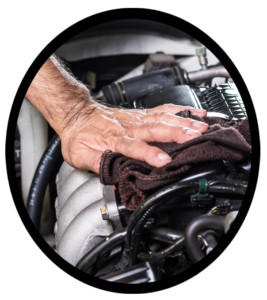
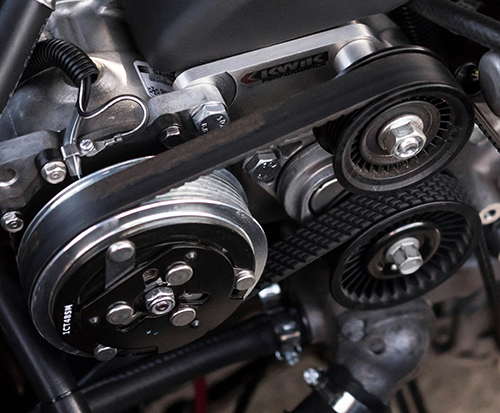 Belts and hoses don’t need to be replaced often, but a tune up allows for an opportunity to examine their condition for wear and tear.
AUTOMOBILE FLUIDS
An automobile needs a lot of fluids to operate. Besides gasoline, a car will have brake fluid, engine coolant, transmission fluid, power steering fluid, differential fluid, engine oil, and of course windshield washer fluid (some might argue coffee). A car tune up should include checking these various automobile fluid levels and top off or replace at the intervals suggested by the vehicle owner’s manual.
OIL CHANGE
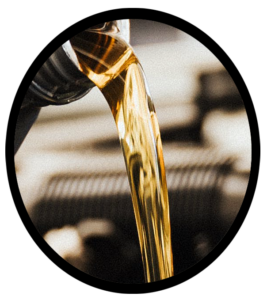
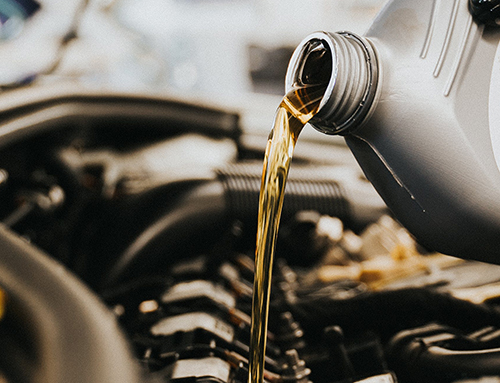
One goal when designing a car engine is to reduce the amount of heat produced, which commonly involves reducing friction with the vehicle’s moving parts. When a car first comes off the assembly line, it’s engine components are precision machined to minimize contamination while the various fluids are working through all the moving parts. Dirt is the enemy of automobile engines and it is particularly harmful in the oil. Oil serves as the lubricant in the engine block forming a microscopic film between the cylinder walls and the pistons that are churning at 1000’s of revolutions per minute. Oil also lubricates the crankshaft and piston valves. Contaminants can enter the engine from multiple areas. Air and gas filters will catch larger particles, but smaller particles can slip by. Small metal slivers can also shake loose from the engine gears and components. After enough contaminants get through, the particles can start to affect the effectiveness of the oil and start to grind on the engine metal. Older cars used to require oil changes every 3,000 miles, but modern cars with new synthetic oil can extend up to 15,000 miles without an oil change.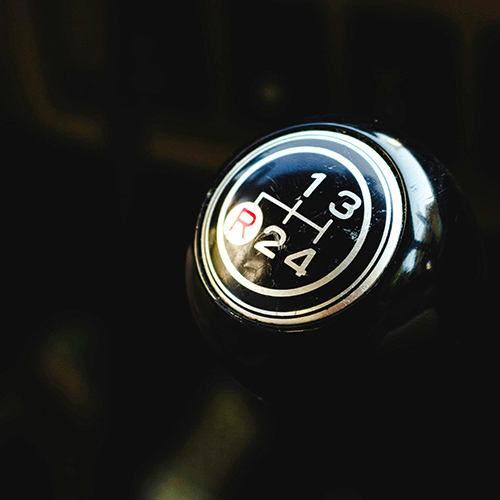 TRANSMISSION FLUID
Whether you have a manual or automatic transmission, both require transmission fluid. For manual transmissions, the transmission fluid lubricates the complex maze of gears and synchronizers. For automatic transmissions, it lubricates the gears and clutch packs. Most car models suggest changing the transmission fluid between 25,000 and 40,000 miles.
DIFFERENTIAL FLUID
The car’s transmission transfers its torque energy to the differential through another series of gears which is finally transferred to the axles and wheels. Just like the transmission gears, the differential gears also need to be well lubricated to minimize friction, but differential fluid can last up to three times longer before needing service. Differential fluid doesn’t have a filter and can build up metal slivers and other particles quicker than other car lubricants and should be changed every 30-60,000 miles.BRAKE FLUID
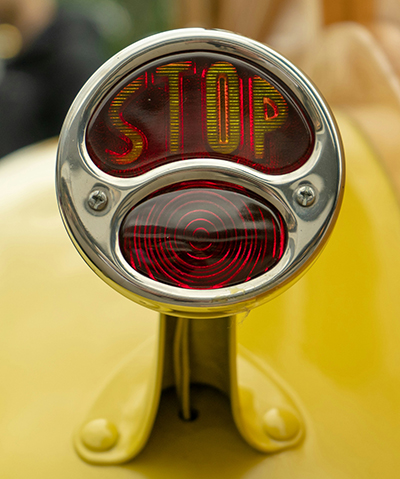
While removed from the engine, maintaining the brake system of your vehicle is critical for safe operation. The hydraulic brake fluid is fed into the calipers to force the pads against the brake rotors. Brake fluid is specially formulated to operate at very high temperatures, but the fluid also has a tendency to collect water. Not only does this increase the odds of corrosion but also lowers the boiling point of the brake fluid. Car manufacturers generally suggest flushing the brake fluid when the brake pads or rotors are replaced, or every 25,000 miles.
ANTI-FREEZE (ENGINE COOLANT)
Your car’s anti-freeze engine coolant does a couple jobs. Its primary job is to cool the engine while not freezing during extremely cold weather. Once the coolant temperature has been reduced in the radiator, it is pumped through a web of channels within the engine block where it absorbs heat from around the cylinders. Once it cycles through the engine block, the engine coolant returns to the radiator to cool down before heading to the engine again. The anti-freeze also heats the passenger cabin of the car. When you turn the heat on in the cabin, instead of heading to the radiator, the heated engine coolant that has cycled through the engine block is diverted to the heater core located just outside the cabin. A fan blows air over the heater core which transfers some of the engine block heat to the cabin interior and lowers the temperature of the engine coolant. There is a wide variance in the frequency of replacing engine coolant depending on vehicle and coolant type.AIR CONDITIONING FLUID
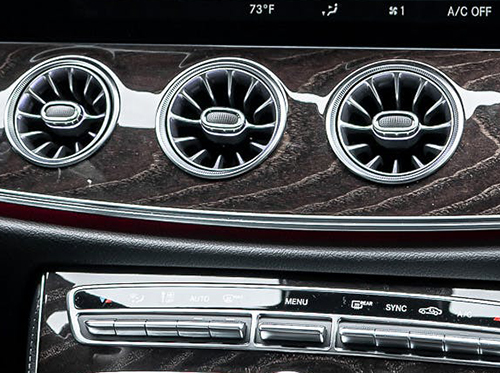
Most modern cars come equipped with air conditioning and it works similarly to engine coolant fluid. After the chilled air conditioning fluid comes out of the condenser, the pressure is lowered and any condensation removed before entering the evaporator. A fan in front of the evaporator coils blows cool air into the passenger cabin which simultaneously pulls the hot, humid air out of the cabin to be absorbed by the air conditioning fluid in the evaporator. As the air conditioning fluid heats up, it transitions to a vapor before its fed into the compressor to increase the pressure. Exiting the condenser as a high-pressure vapor, it re-enters the condenser where it is cooled by a fan until it reverts back to its cooled, liquid state.
POWER STEERING FLUID
Similar to brake fluid, power steering fluid is also a hydraulic fluid. The hydraulic fluid moves a piston along the steering rack with pressure applied from the pinion in response to the direction the steering wheel is turned. The increased pressure on either side of the hydraulic piston determines whether the tie rods are pushed or pulled for a right or left turn. You can run on power steering fluid for 60-80,000 miles before needing service. Although, you may not need power steering fluid. Over the last decade, some car manufacturers have transitioned to electric power steering which replaces an electric motor for the hydraulic steering fluid.WINDSHIELD WIPER FLUID
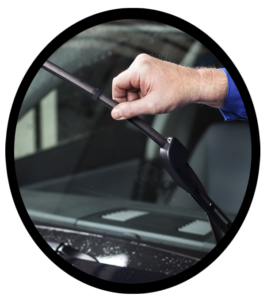
While windshield wiper fluid won’t affect your car’s performance, a run in with a semi during the rain or snow or unfortunate timing with a flock of birds or bugs and you’re hoping the windshield wiper fluid is full. De-icers and specially formulated bug washes are available if these events are a common occurrence.AUTOMOBILE FILTERS
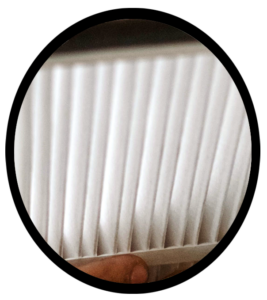
Dust, dirt, and particles are the enemy of cars, so they are equipped with several filters to keep dirt from getting where it’s not wanted. Filters may need changed more often depending on your driving environment, for instance, construction zones, farming communities, dirt roads, etc.AIR FILTER
A car sucks in a large quantity of air to mix with the gas for the combustion within the cylinder. The car’s air filter traps most of the dirt and particles before it enters the cylinder.OIL FILTER
When your car’s engine is turned on, the oil pump draws oil from the oil pan (sump) and forces it through to the oil filter. The oil filter removes dirt, particles, and combustion remnants before entering the engine. If allowed to accumulate for too long, the oil will bypass the filter and enter the engine block un-cleaned. Oil filters should be replaced when the oil is changed.GAS FILTER
The fuel, or gas, filter clears particles that enter through the gasoline supply.TRANSMISSION OIL FILTER
One you may not have heard of before is a transmission oil filter. The transmission is constructed of numerous tightly packed metal gears with tight tolerances. Just like the other filters, the transmission oil filter cleans the oil that lubricates the transmission case components.BELTS & HOSES
Belts and hoses don’t need to be replaced often, but a tune up allows for an opportunity to examine their condition for wear and tear.
HOSES
The rubber hoses of a car absorb a lot of pressure and temperature stresses. Advances in rubber manufacturing have enabled these components to last significantly longer than their predecessors, but visual clues of potential problems include cracking, pealing, and glazing. Different car models may have other hoses, most cars generally have a: fuel hose which sends gas to the engine; power steering hose; radiator hose that delivers coolant to the engine; and a heater hose that delivers coolant to the heater core.BELTS
Similar to the hoses, the belts can also show signs of age and wear, but the neoprene rubber and Kevlar belts of old have been replaced by EPDM rubber which can last up to twice as long and is better at resisting stretching.SPARK PLUGS
Back in the 1970’s, it was suggested that spark plugs get changed every 12-15,000 miles. Once electronic ignitions technology was introduced in the 80’s and with spark plug metallurgy innovations, increased spark plug lifespan up to 30,000 miles. Spark plugs today can last up to 100,000 or more.
Every car needs periodic maintenance performed to maximize the return on your investment by getting more miles from your car and prevent more costly repairs later. But what gets done during that tune up depends on the type of vehicle you own, the age of the car, and the driving conditions. Most tune-up procedures are determined by the number of miles driven, but driving conditions can impact frequency and complexity.
The car tune up has changed a bit over the years. On cars made before electronic ignition in the 1980’s, tune ups were commonly a monthly event. In addition to traditional tune-up tasks of changing the fluids, filters, and plugs, on older cars you could expect to adjust the carburetor and lube the chassis. About every six months, you might change the spark plugs, spark plug wires, ignition coil, distributor cap, condenser, breaker points, and rotor.
Today’s cars are made with tighter tolerances, better engineering, and more rigid components. With sophisticated on-board computer systems and advanced sensors, they can provide instant diagnostic analysis and automatically adapt engine performance based on the perceived need of the driving conditions. Outside of fluids and filters, the tires and wiper blades are likely to be the first car component an owner will replace within the first 4-5 years.
An automobile needs a lot of fluids to operate. Besides gasoline, a car will have brake fluid, engine coolant, transmission fluid, power steering fluid, differential fluid, engine oil, and of course windshield washer fluid (some might argue coffee). A car tune up should include checking these various automobile fluid levels and top off or replace at the intervals suggested by the vehicle owner’s manual.
Whether you have a manual or automatic transmission, both require transmission fluid. For manual transmissions, the transmission fluid lubricates the complex maze of gears and synchronizers. For automatic transmissions, it lubricates the gears and clutch packs. Most car models suggest changing the transmission fluid between 25,000 and 40,000 miles.
While removed from the engine, maintaining the brake system of your vehicle is critical for safe operation. The hydraulic brake fluid is fed into the calipers to force the pads against the brake rotors. Brake fluid is specially formulated to operate at very high temperatures, but the fluid also has a tendency to collect water. Not only does this increase the odds of corrosion but also lowers the boiling point of the brake fluid. Car manufacturers generally suggest flushing the brake fluid when the brake pads or rotors are replaced, or every 25,000 miles.
Most modern cars come equipped with air conditioning and it works similarly to engine coolant fluid. After the chilled air conditioning fluid comes out of the condenser, the pressure is lowered and any condensation removed before entering the evaporator. A fan in front of the evaporator coils blows cool air into the passenger cabin which simultaneously pulls the hot, humid air out of the cabin to be absorbed by the air conditioning fluid in the evaporator. As the air conditioning fluid heats up, it transitions to a vapor before its fed into the compressor to increase the pressure. Exiting the condenser as a high-pressure vapor, it re-enters the condenser where it is cooled by a fan until it reverts back to its cooled, liquid state.
Belts and hoses don’t need to be replaced often, but a tune up allows for an opportunity to examine their condition for wear and tear.
AUTOMOBILE FLUIDS
An automobile needs a lot of fluids to operate. Besides gasoline, a car will have brake fluid, engine coolant, transmission fluid, power steering fluid, differential fluid, engine oil, and of course windshield washer fluid (some might argue coffee). A car tune up should include checking these various automobile fluid levels and top off or replace at the intervals suggested by the vehicle owner’s manual.
OIL CHANGE
One goal when designing a car engine is to reduce the amount of heat produced, which commonly involves reducing friction with the vehicle’s moving parts. When a car first comes off the assembly line, it’s engine components are precision machined to minimize contamination while the various fluids are working through all the moving parts. Dirt is the enemy of automobile engines and it is particularly harmful in the oil. Oil serves as the lubricant in the engine block forming a microscopic film between the cylinder walls and the pistons that are churning at 1000’s of revolutions per minute. Oil also lubricates the crankshaft and piston valves. Contaminants can enter the engine from multiple areas. Air and gas filters will catch larger particles, but smaller particles can slip by. Small metal slivers can also shake loose from the engine gears and components. After enough contaminants get through, the particles can start to affect the effectiveness of the oil and start to grind on the engine metal. Older cars used to require oil changes every 3,000 miles, but modern cars with new synthetic oil can extend up to 15,000 miles without an oil change.TRANSMISSION FLUID
Whether you have a manual or automatic transmission, both require transmission fluid. For manual transmissions, the transmission fluid lubricates the complex maze of gears and synchronizers. For automatic transmissions, it lubricates the gears and clutch packs. Most car models suggest changing the transmission fluid between 25,000 and 40,000 miles.
DIFFERENTIAL FLUID
The car’s transmission transfers its torque energy to the differential through another series of gears which is finally transferred to the axles and wheels. Just like the transmission gears, the differential gears also need to be well lubricated to minimize friction, but differential fluid can last up to three times longer before needing service. Differential fluid doesn’t have a filter and can build up metal slivers and other particles quicker than other car lubricants and should be changed every 30-60,000 miles.BRAKE FLUID
While removed from the engine, maintaining the brake system of your vehicle is critical for safe operation. The hydraulic brake fluid is fed into the calipers to force the pads against the brake rotors. Brake fluid is specially formulated to operate at very high temperatures, but the fluid also has a tendency to collect water. Not only does this increase the odds of corrosion but also lowers the boiling point of the brake fluid. Car manufacturers generally suggest flushing the brake fluid when the brake pads or rotors are replaced, or every 25,000 miles.
ANTI-FREEZE (ENGINE COOLANT)
Your car’s anti-freeze engine coolant does a couple jobs. Its primary job is to cool the engine while not freezing during extremely cold weather. Once the coolant temperature has been reduced in the radiator, it is pumped through a web of channels within the engine block where it absorbs heat from around the cylinders. Once it cycles through the engine block, the engine coolant returns to the radiator to cool down before heading to the engine again. The anti-freeze also heats the passenger cabin of the car. When you turn the heat on in the cabin, instead of heading to the radiator, the heated engine coolant that has cycled through the engine block is diverted to the heater core located just outside the cabin. A fan blows air over the heater core which transfers some of the engine block heat to the cabin interior and lowers the temperature of the engine coolant. There is a wide variance in the frequency of replacing engine coolant depending on vehicle and coolant type.AIR CONDITIONING FLUID
Most modern cars come equipped with air conditioning and it works similarly to engine coolant fluid. After the chilled air conditioning fluid comes out of the condenser, the pressure is lowered and any condensation removed before entering the evaporator. A fan in front of the evaporator coils blows cool air into the passenger cabin which simultaneously pulls the hot, humid air out of the cabin to be absorbed by the air conditioning fluid in the evaporator. As the air conditioning fluid heats up, it transitions to a vapor before its fed into the compressor to increase the pressure. Exiting the condenser as a high-pressure vapor, it re-enters the condenser where it is cooled by a fan until it reverts back to its cooled, liquid state.
POWER STEERING FLUID
Similar to brake fluid, power steering fluid is also a hydraulic fluid. The hydraulic fluid moves a piston along the steering rack with pressure applied from the pinion in response to the direction the steering wheel is turned. The increased pressure on either side of the hydraulic piston determines whether the tie rods are pushed or pulled for a right or left turn. You can run on power steering fluid for 60-80,000 miles before needing service. Although, you may not need power steering fluid. Over the last decade, some car manufacturers have transitioned to electric power steering which replaces an electric motor for the hydraulic steering fluid.WINDSHIELD WIPER FLUID
While windshield wiper fluid won’t affect your car’s performance, a run in with a semi during the rain or snow or unfortunate timing with a flock of birds or bugs and you’re hoping the windshield wiper fluid is full. De-icers and specially formulated bug washes are available if these events are a common occurrence.AUTOMOBILE FILTERS
Dust, dirt, and particles are the enemy of cars, so they are equipped with several filters to keep dirt from getting where it’s not wanted. Filters may need changed more often depending on your driving environment, for instance, construction zones, farming communities, dirt roads, etc.AIR FILTER
A car sucks in a large quantity of air to mix with the gas for the combustion within the cylinder. The car’s air filter traps most of the dirt and particles before it enters the cylinder.OIL FILTER
When your car’s engine is turned on, the oil pump draws oil from the oil pan (sump) and forces it through to the oil filter. The oil filter removes dirt, particles, and combustion remnants before entering the engine. If allowed to accumulate for too long, the oil will bypass the filter and enter the engine block un-cleaned. Oil filters should be replaced when the oil is changed.GAS FILTER
The fuel, or gas, filter clears particles that enter through the gasoline supply.TRANSMISSION OIL FILTER
One you may not have heard of before is a transmission oil filter. The transmission is constructed of numerous tightly packed metal gears with tight tolerances. Just like the other filters, the transmission oil filter cleans the oil that lubricates the transmission case components.BELTS & HOSES
Belts and hoses don’t need to be replaced often, but a tune up allows for an opportunity to examine their condition for wear and tear.