


OHIO Owned & Operated  CERTIFIED Mechanics
OHIO Owned & Operated
CERTIFIED Mechanics
WHEEL & TIRE BALANCING
Modern American roadways are expansive and in generally good shape, providing a smooth driving surface that offers little resistance or hazards to today’s drivers. That hasn’t always been the case.
At the turn of the 19th century, many inner-city areas of the United States already had brick or cobblestone roadway systems. Beyond the city centers, roads may have gravel roads or worse, the old dirt trails. This was adequate for the horse and bicycle traffic or anything else that traveled less than 10mph, even the emerging automobile.
Early car tires were fashioned after the carriage and bicycle tires. Made of solid rubber, it wasn’t the smoothest ride, but it helped lessen the jolts a little, especially in warmer weather. Pneumatic tires were soon developed, along with better suspension systems, which significantly improved passenger comfort. As this young industry was developing, increasingly more emphasis was placed on driver comfort and manufacturing refinements. In pretty short order, the roads were getting smoother, the tires were getting wider, and the cars were getting bigger and faster. Between 1910 and 1930, car weight and speeds on average increased by over 35%.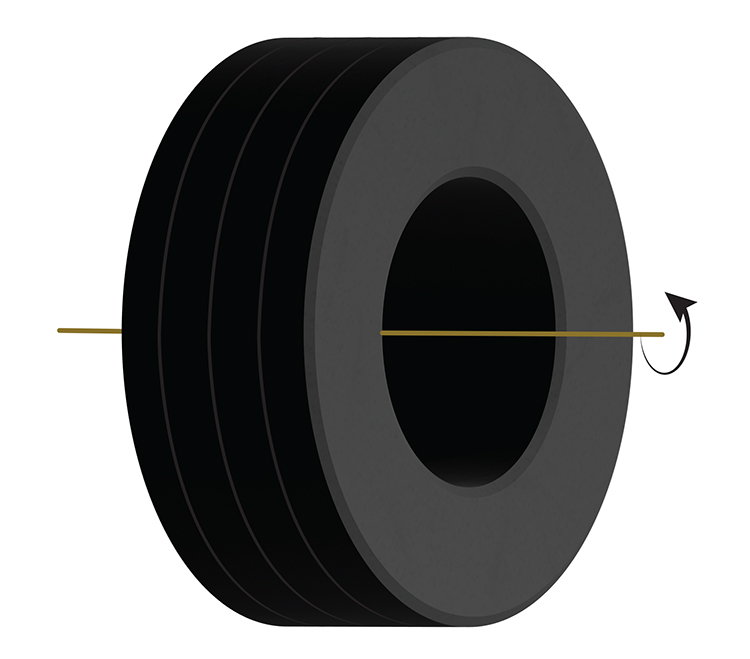
The engineering was also getting better, and it had to. These sizes and speeds added exponentially greater forces on the vehicle components, with the tires taking on a large share of that load. Humans have quite a history with the wheel and have known for centuries a more perfect circle results in a better performance. And faster speeds would reveal these imperfections.
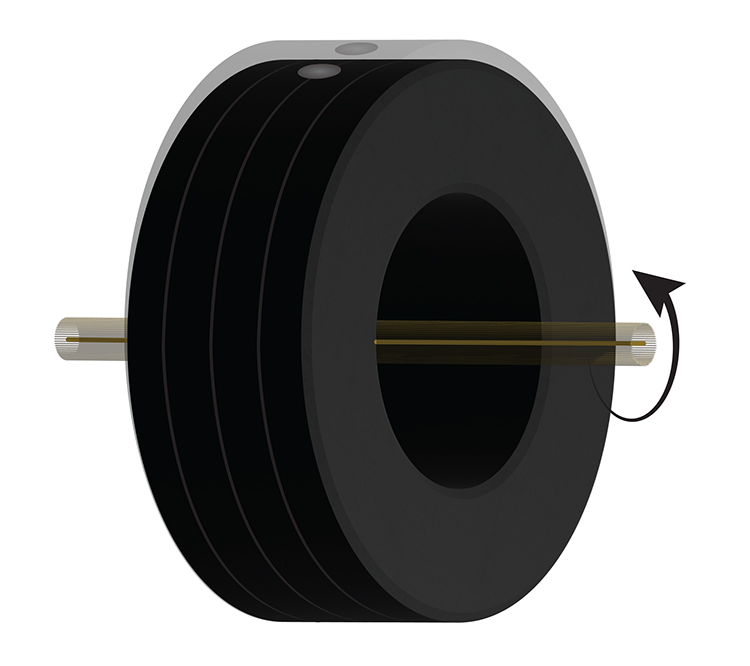
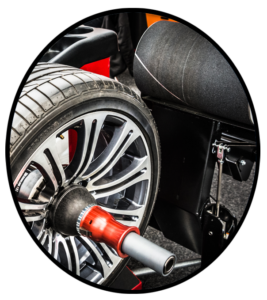
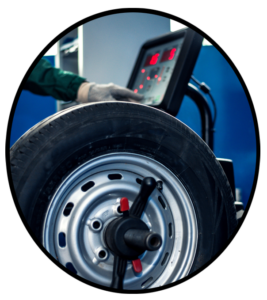
Optimally, when a vehicle emerges from the production line, the tires are perfectly round and aligned and perpendicular to the ground. They are also perfectly balanced from top to bottom and side to side and mounted on a wheel rim that is also perfectly round and weighted. While wheel alignment involves the wheel axis along three planes, tire balancing is ensuring equal weight distribution around the tire, itself.
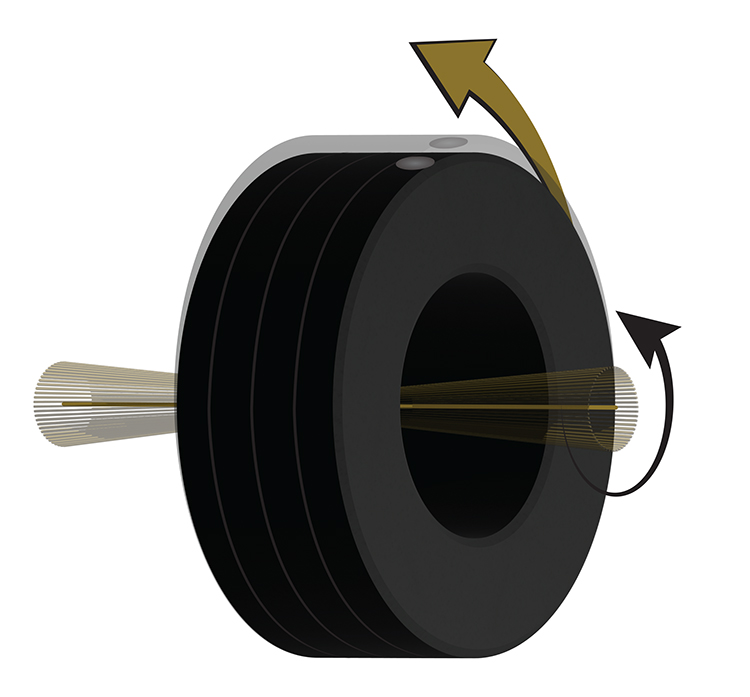
Unfortunately, that level of precision wasn’t achievable back then. It’s not achievable even with today’s computer-driven manufacturing, but it’s much closer. Each process in the production of a tire and rim introduces new tolerances. There can be differences in the chemical formulations, environmental changes, or the production machines, themselves.
And that’s before it left the factory. Outside the factory, a number of things could knock a tire out of balance. A common cause were impacts. The accumulative affect of early road conditions, curbs and road debris would take their toll. Early rubber lacked the additives to protect them against cold, UV rays and moisture and could quickly eat away at the treads and throw off the weight balance. If permitted to progress, the balance continues to degrade, increasing the amount of wobble in the tires which transfers the vibrations throughout the wheel assembly.
WHEEL & TIRE BALANCING
Modern American roadways are expansive and in generally good shape, providing a smooth driving surface that offers little resistance or hazards to today’s drivers. That hasn’t always been the case. At the turn of the 19th century, many inner-city areas of the United States already had brick or cobblestone roadway systems. Beyond the city centers, roads may have gravel roads or worse, the old dirt trails. This was adequate for the horse and bicycle traffic or anything else that traveled less than 10mph, even the emerging automobile. Early car tires were fashioned after the carriage and bicycle tires. Made of solid rubber, it wasn’t the smoothest ride, but it helped lessen the jolts a little, especially in warmer weather. Pneumatic tires were soon developed, along with better suspension systems, which significantly improved passenger comfort. As this young industry was developing, increasingly more emphasis was placed on driver comfort and manufacturing refinements. In pretty short order, the roads were getting smoother, the tires were getting wider, and the cars were getting bigger and faster. Between 1910 and 1930, car weight and speeds on average increased by over 35%.
The engineering was also getting better, and it had to. These sizes and speeds added exponentially greater forces on the vehicle components, with the tires taking on a large share of that load. Humans have quite a history with the wheel and have known for centuries a more perfect circle results in a better performance. And faster speeds would reveal these imperfections.
Optimally, when a vehicle emerges from the production line, the tires are perfectly round and aligned and perpendicular to the ground. They are also perfectly balanced from top to bottom and side to side and mounted on a wheel rim that is also perfectly round and weighted. While wheel alignment involves the wheel axis along three planes, tire balancing is ensuring equal weight distribution around the tire, itself.
Unfortunately, that level of precision wasn’t achievable back then. It’s not achievable even with today’s computer-driven manufacturing, but it’s much closer. Each process in the production of a tire and rim introduces new tolerances. There can be differences in the chemical formulations, environmental changes, or the production machines, themselves.
And that’s before it left the factory. Outside the factory, a number of things could knock a tire out of balance. A common cause were impacts. The accumulative affect of early road conditions, curbs and road debris would take their toll. Early rubber lacked the additives to protect them against cold, UV rays and moisture and could quickly eat away at the treads and throw off the weight balance. If permitted to progress, the balance continues to degrade, increasing the amount of wobble in the tires which transfers the vibrations throughout the wheel assembly.